AR Art Takeovers – T-Challenge XR 2022
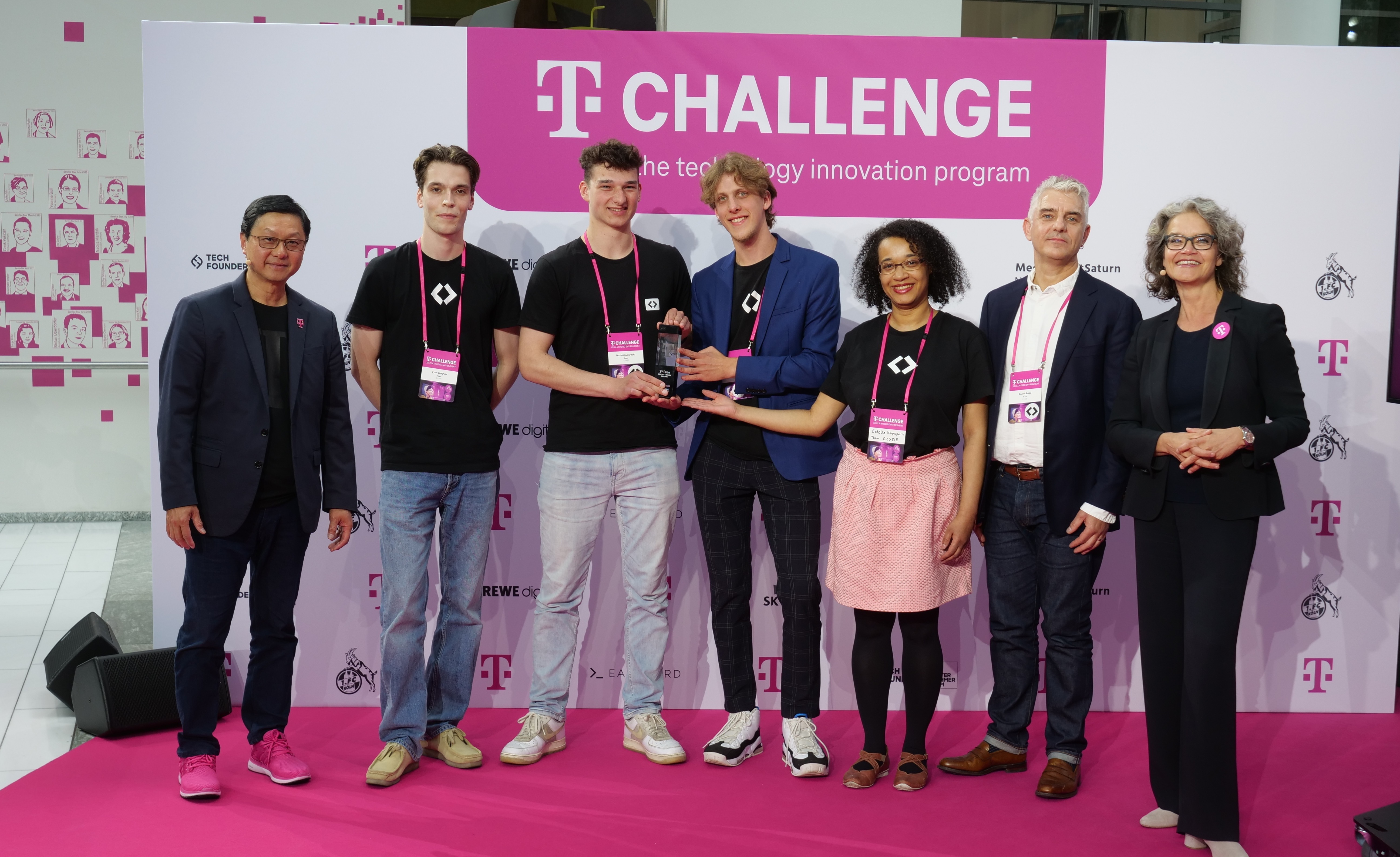
Second prize out of 300 corporate teams, winning €50.000 and presenting to Telekom's executive board at their headquarters in Bonn
Project Goal
At its core, this project tackles the challenge of making XR accessible, visible, and emotionally engaging. Too often, XR is seen as an expensive, niche technology reserved for gamers or enterprise use. We wanted to shift that perception by embedding augmented reality into everyday spaces, places where people already shop, explore, and interact with technology.
The installation would:
- Draw in new customers with visually stunning in-store AR experiences
- Showcase the capabilities of new mobile devices using real-time physics, motion, and 3D interactivity
- Create a low-barrier entry point for customers and staff to engage with XR
- Reinforce Deutsche Telekom’s brand as culturally relevant, future-oriented, and emotionally resonant
The Core Concept
In early 2022, we responded to Deutsche Telekom and T-Mobile US’s global T-Challenge, which called for new ideas that blend Extended Reality (XR) with hybrid retail environments. Our response? A concept that pushes the boundaries of how we experience mobile retail, by turning flagship stores into immersive digital art spaces.
We envisioned AR Art Takeovers: experiential installations that reimagine Telekom’s physical stores as vibrant, living canvases. The idea was to blur the lines between art, technology, and commerce. Creating a space that celebrates new device capabilities, strengthens the brand’s cultural relevance, and builds a memorable connection with visitors.
How It Works
The proposed system transforms flagship stores into AR showrooms, where visitors can use in-store demo devices or their own smartphones (via QR code) to unlock dynamic digital artworks anchored to the physical space.
The artworks are responsive, animated, and context-aware, designed to be easily refreshed or adapted to different marketing campaigns (e.g., product launches, sporting events, cultural moments). From particle systems that react to motion to full-blown volumetric installations, each layer of the experience is crafted to elevate the brand and captivate the visitor.
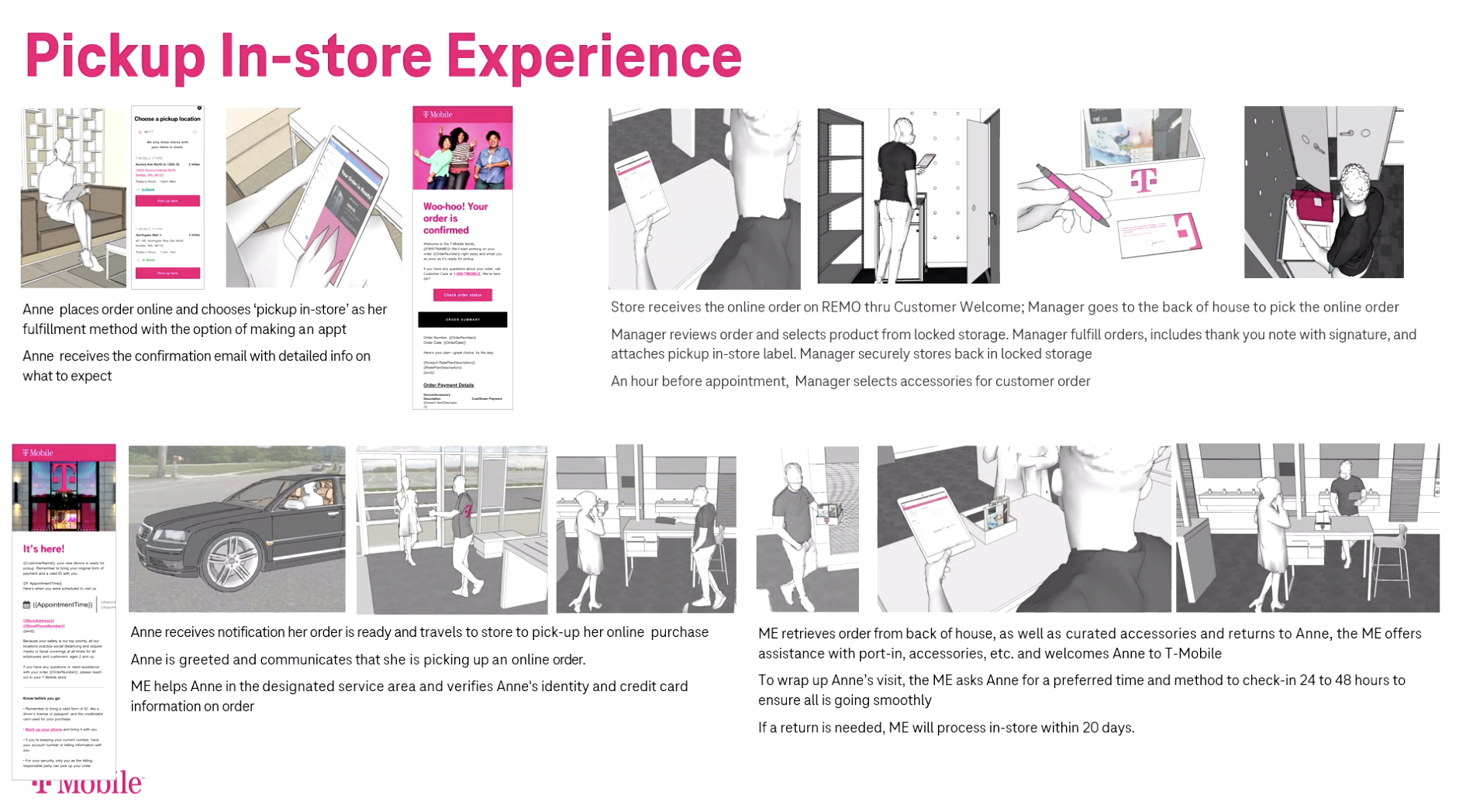
The in-store installation serves as both a customer experience and a research opportunity, collecting insights about engagement, interest in XR, and usability patterns that could inform future services like retail AR when picking up a phone.
Experience Design & Prototyping
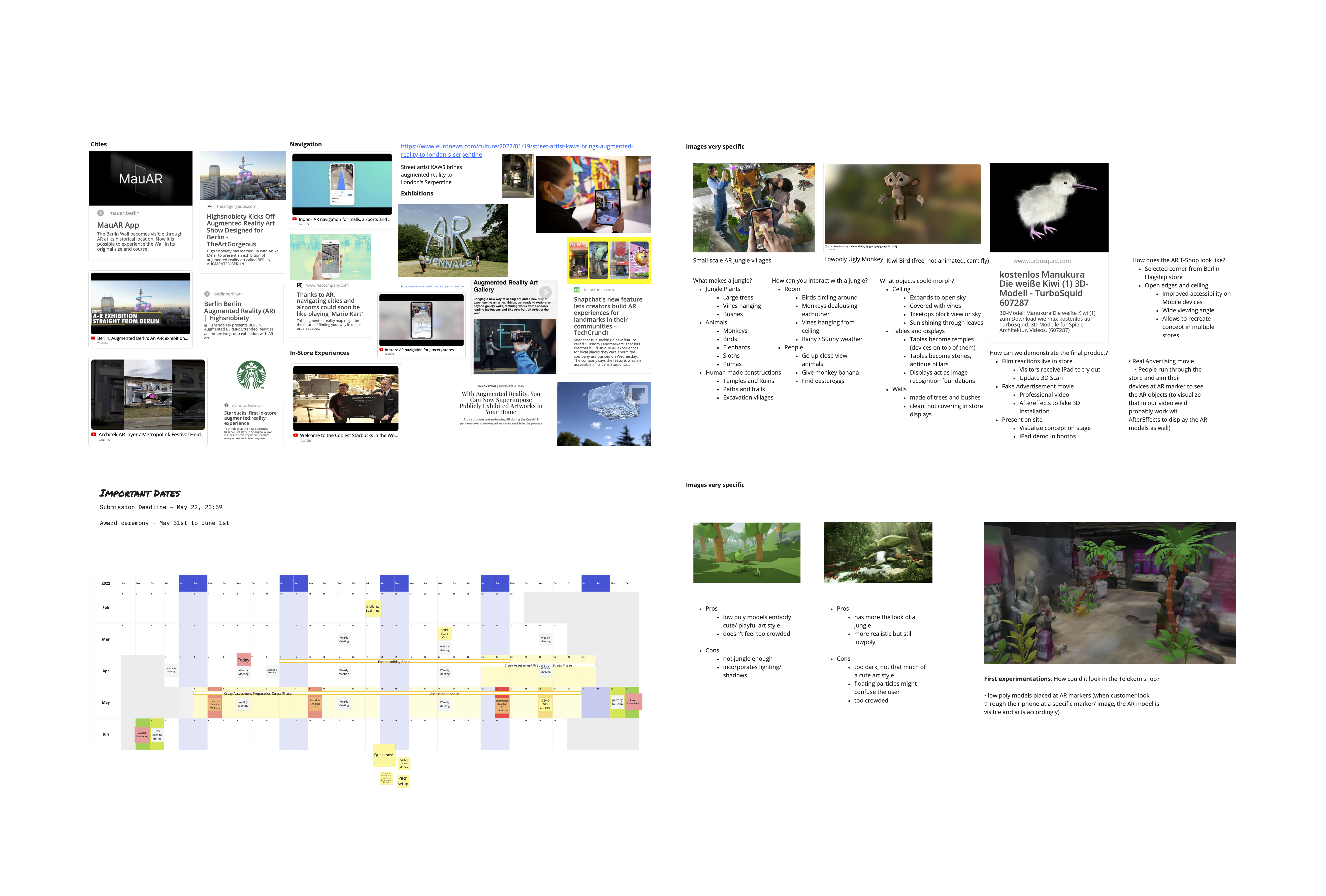
We began by creating a concept board to collect ideas, work on thoughts assynchronously and design first visualizations.
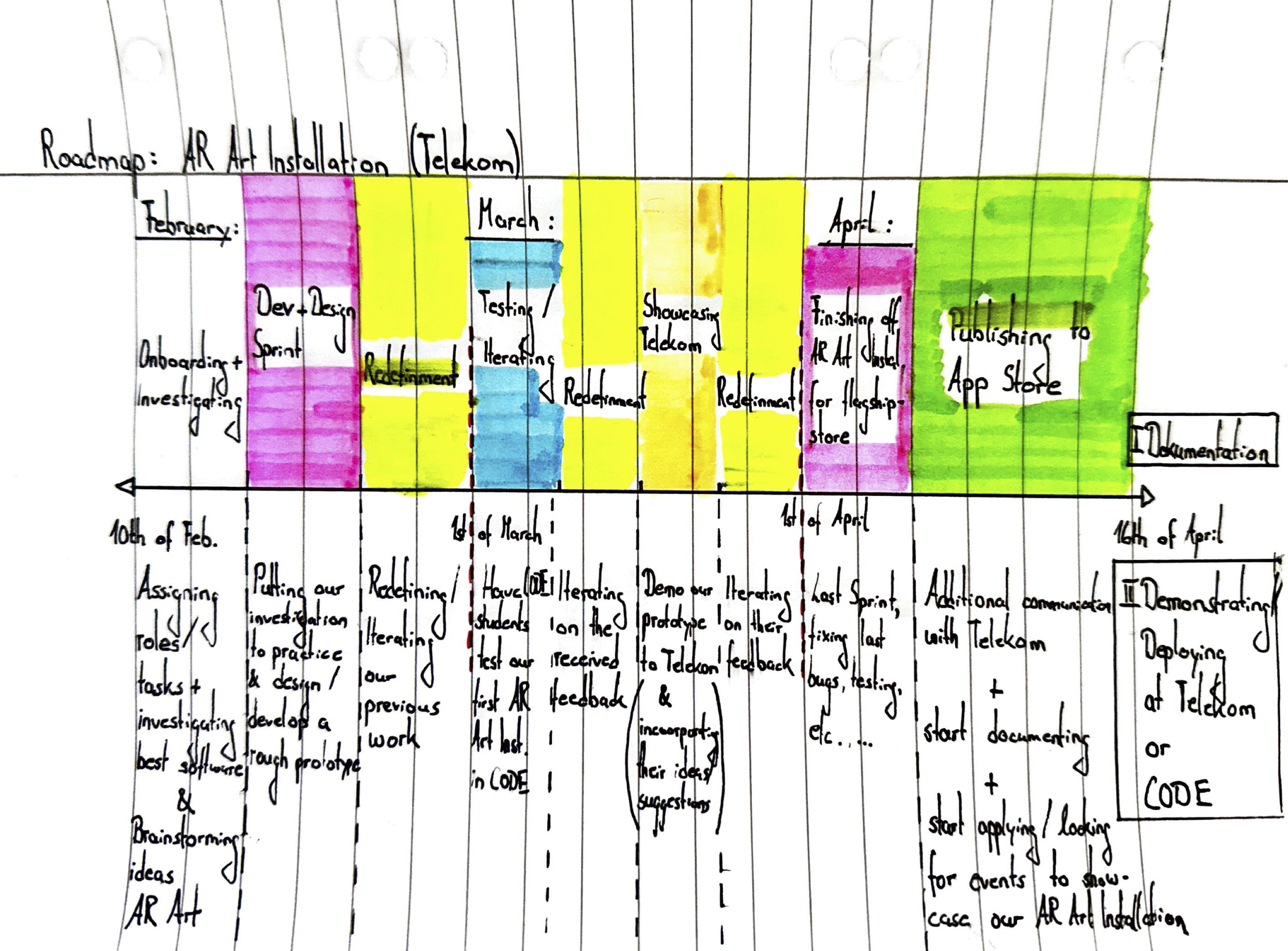
Of couse, as this was a student project next to exams, I had many parallel duties, so I had to manage my time wisely and focus on the most important tasks. Therefore I prepared a detailed roadmap and prioritized tasks accordingly.
We gathered twice every week to synthesise a final concept that we wanted to work on. Later on we submitted an initial pitch that proposed the idea of immersive art installations designed for retail.
Just a few weeks later we were excited to be selected among hundreds of international applicants as a finalist, and moved into concept development and prototyping.
To begin spatial planning and accurate experience design, we laser-scanned Deutsche Telekom’s Berlin flagship store using Apple’s new LiDAR tools. This allowed us to create a high-fidelity digital twin of the retail space. Having precise measurements and environmental context was essential for visualizing how our concept would scale and behave in the real world.
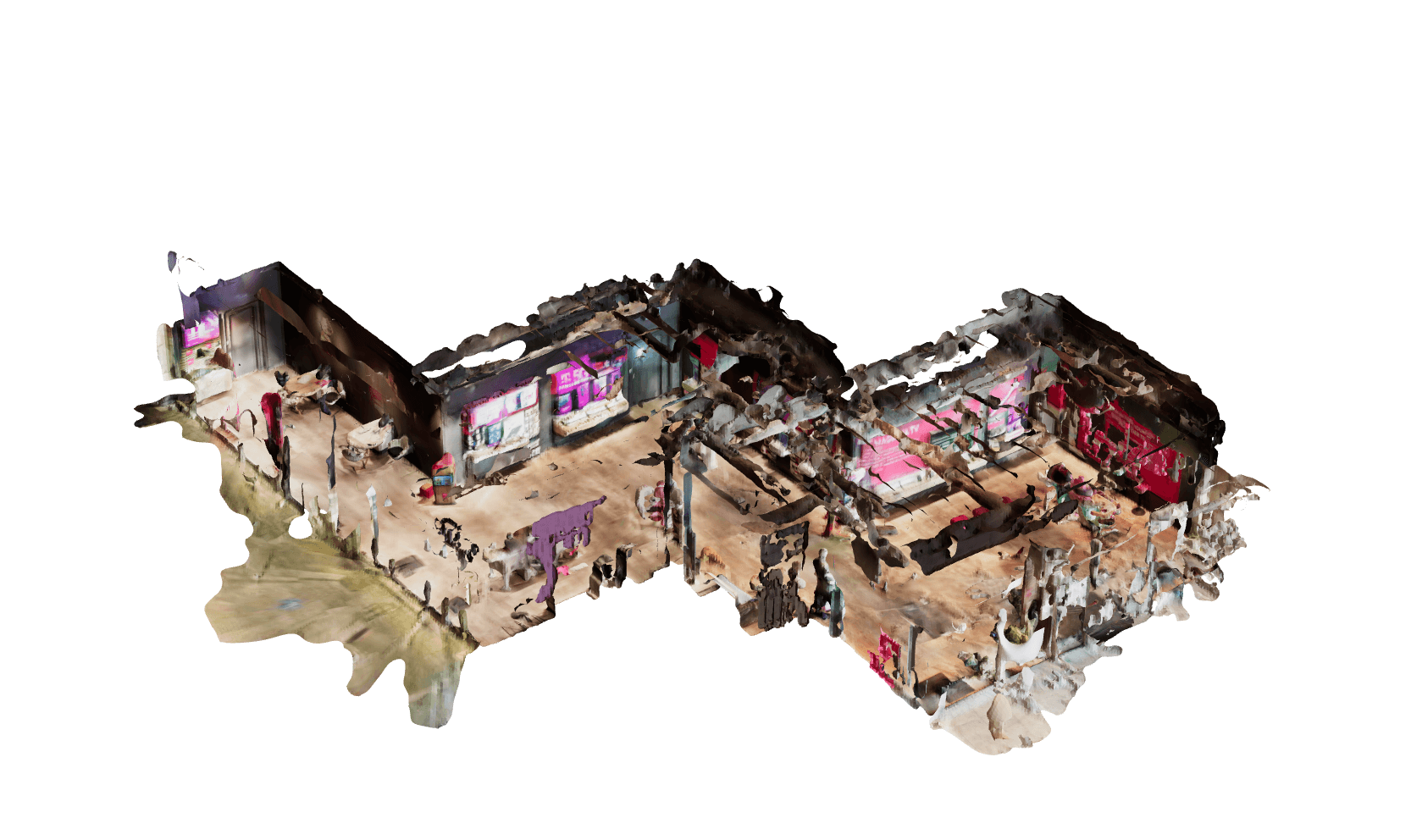
We then reconfigured the scan to create a volumetric composition of the space, allowing us to visualize the space as a 3D model.
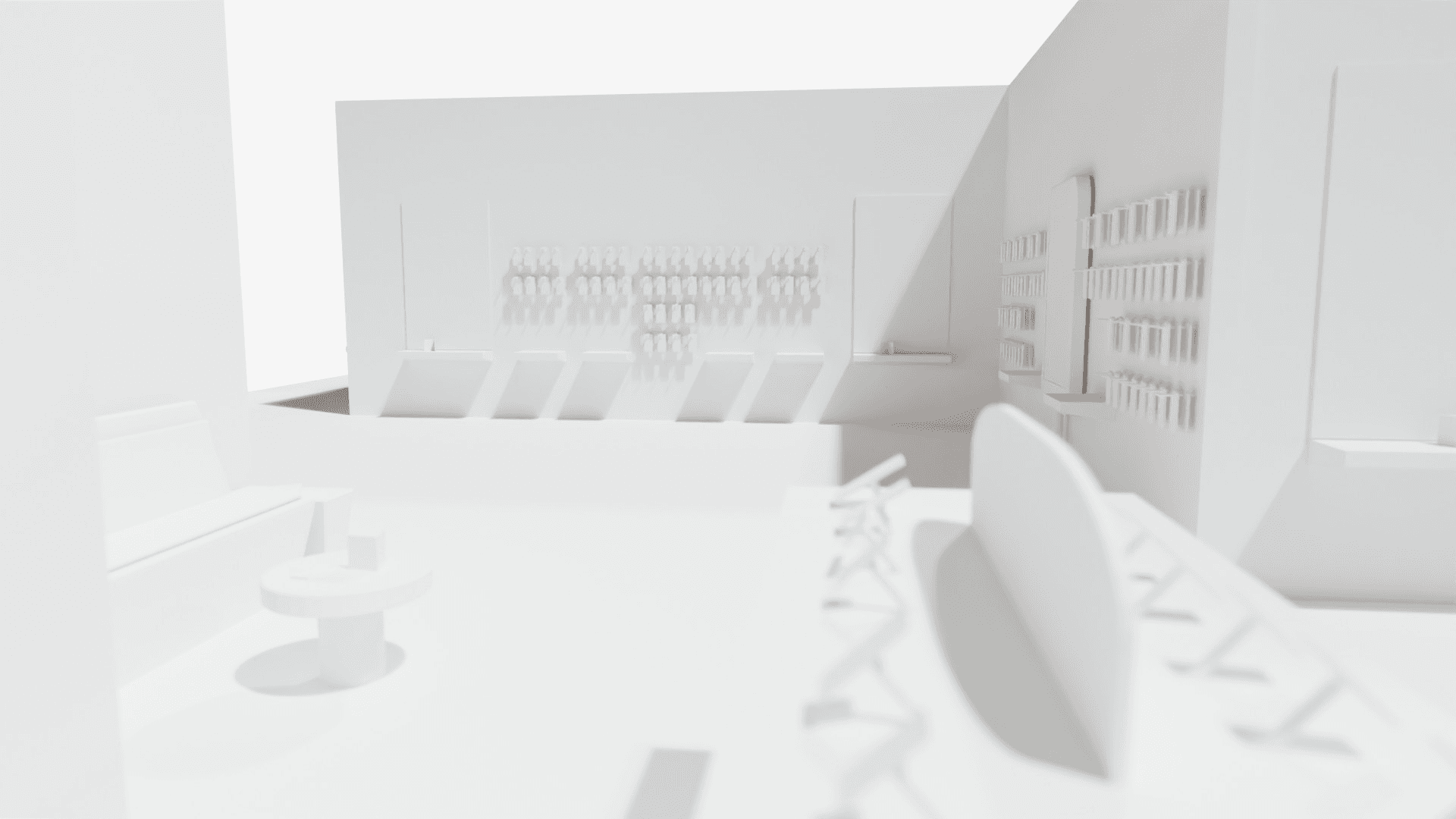
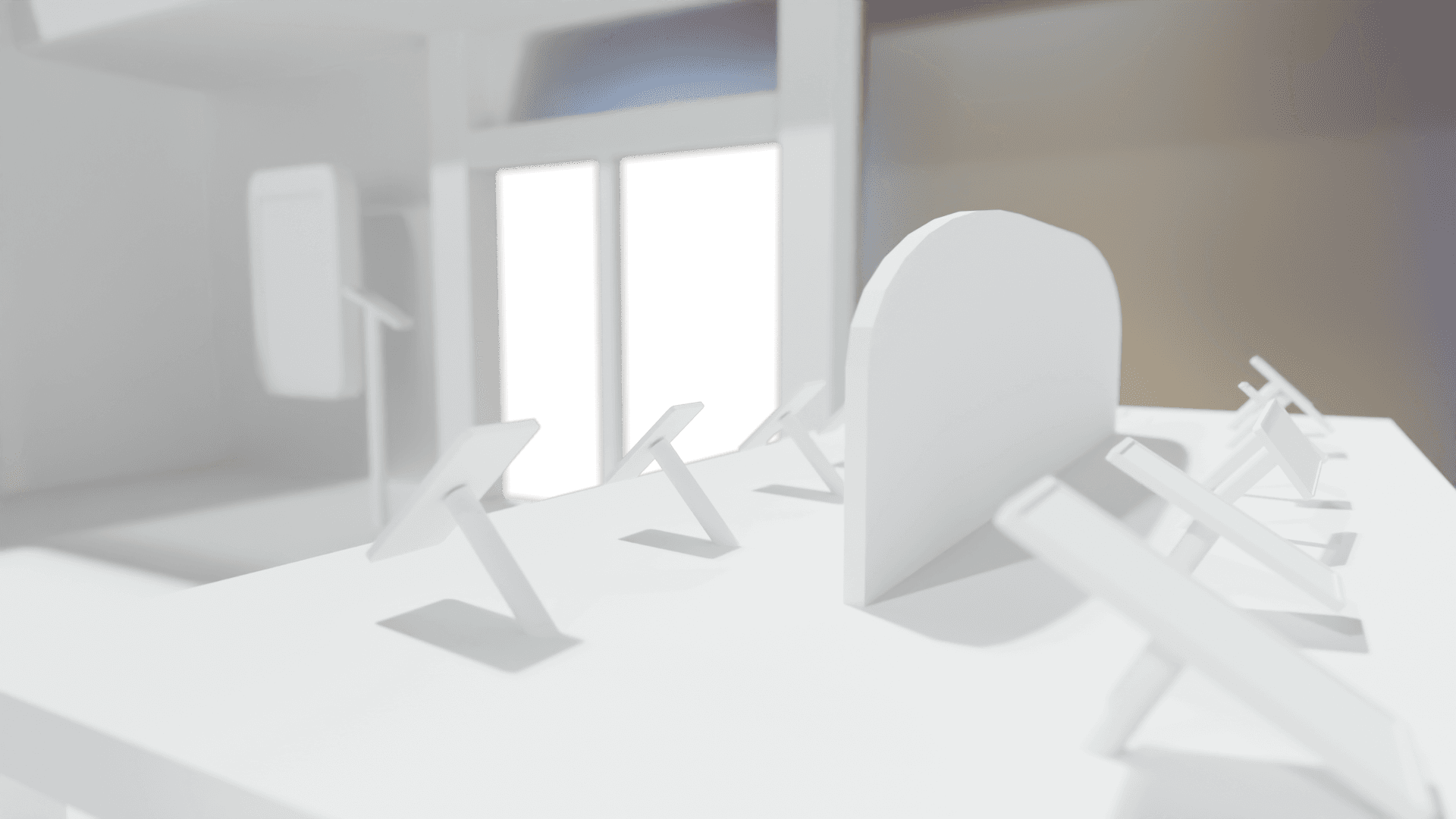
Once the spatial model was complete, we used Blender to design and animate the proposed AR installations. We explored how particle systems and volumetric compositions could transform the store’s layout into a dynamic canvas for immersive interaction. These early visualizations were used not only for internal iteration, but also to communicate the vision to stakeholders and trial users.
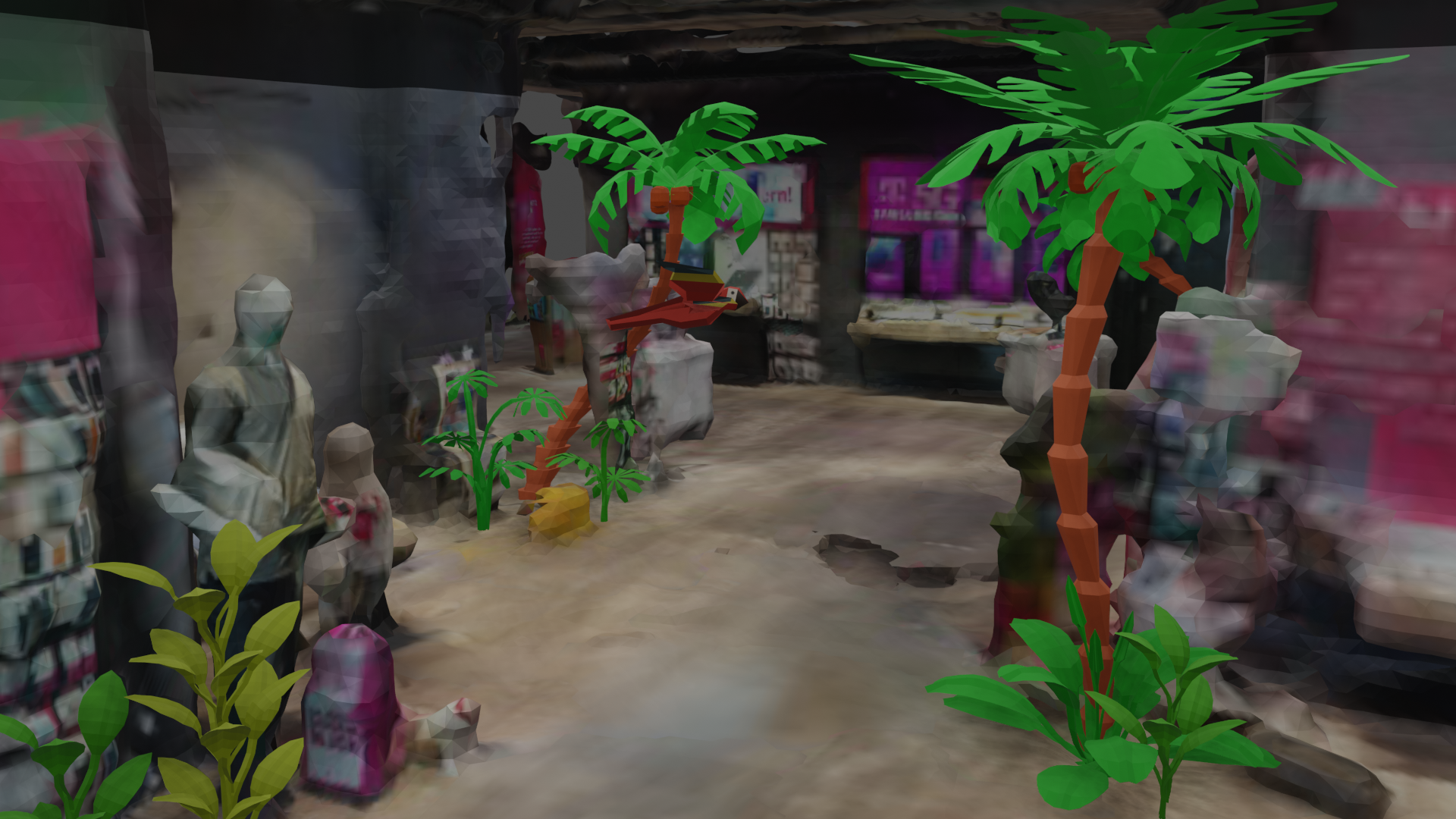
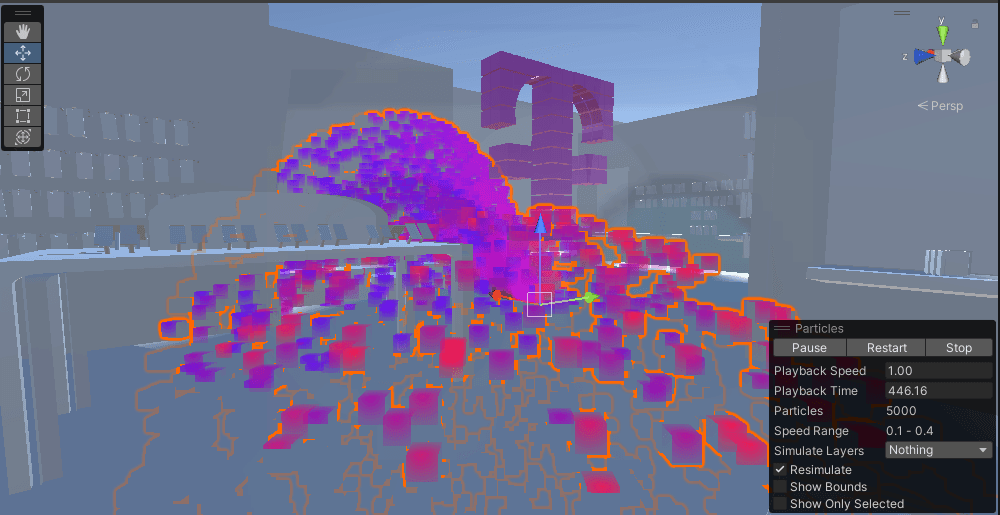
To simulate live user interaction and test technical feasibility, we developed functional prototypes in Unreal Engine. This allowed us to bring the particle-based installations to life in real time, experiment with animation triggers, and test how users might navigate and engage with the experience using in-store demo devices. These tests informed our recommendations for optimal spatial zones and content pacing.

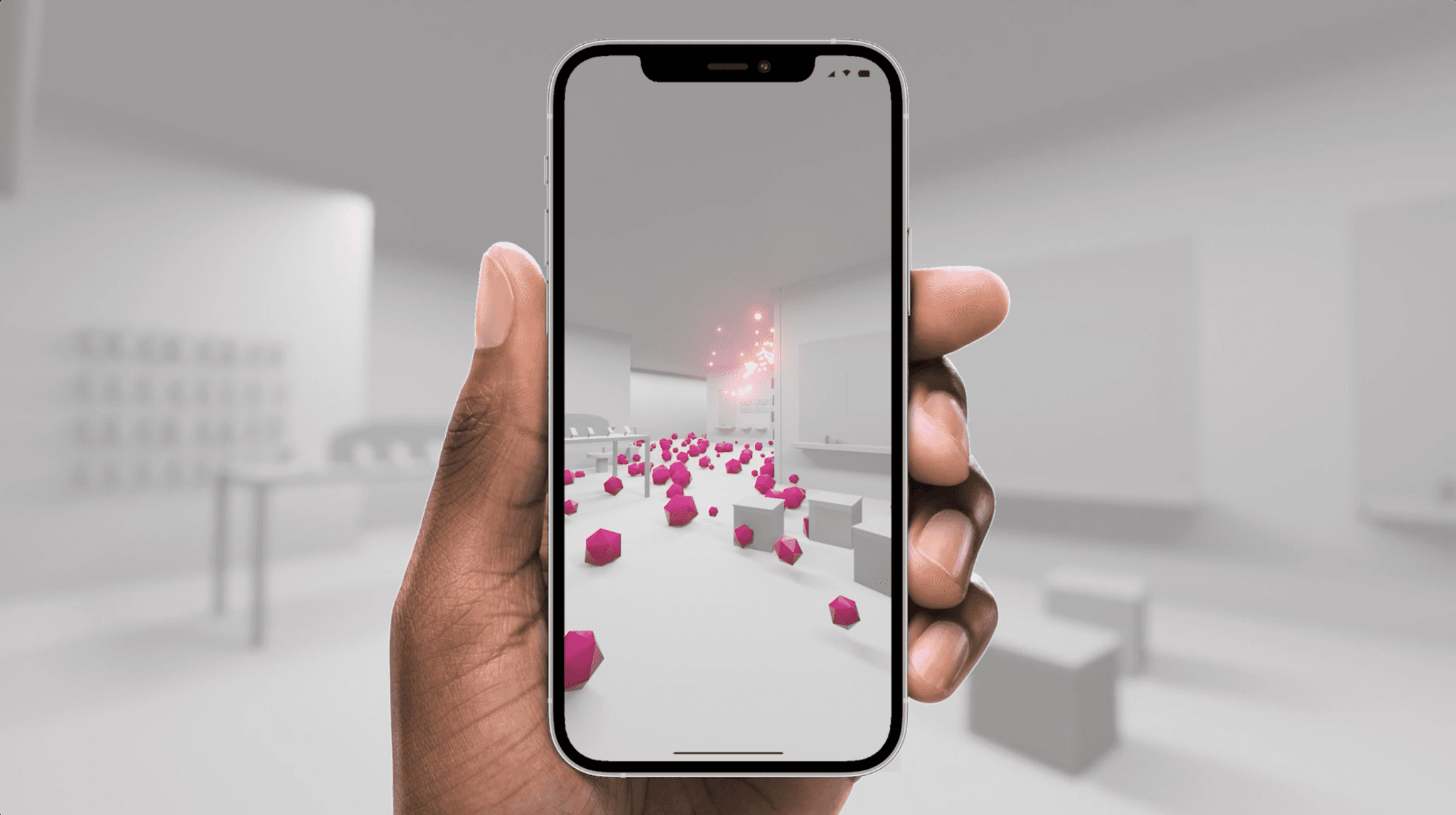
Rather than committing to a fixed aesthetic, we deliberately chose a modular, particle-based design language, enabling flexibility across events, seasons, and campaigns, while showcasing the unique visual potential of next-generation mobile devices.
Benefits for Telekom
This project offered multiple concrete benefits to Deutsche Telekom, beyond its visual appeal:
- Cross-media marketing opportunities through social sharing
- A new dimension of product demos, showing off the power of AR-enabled smartphones in real-life use cases
- Customer data & insights into how XR content is experienced in public space
- A scalable XR framework for future events, including major launches (e.g., UEFA sponsorships or original content premieres)
- Enhanced store visibility as cultural destinations that blend shopping with entertainment and art
Final Demo - Submitted to the Finals
The Outcome
Our team was invited to pitch the final concept live at Deutsche Telekom headquarters in Bonn, competing alongside leading startups and global research teams. The jury praised our solution for its creativity, strategic fit, and immersive storytelling potential.
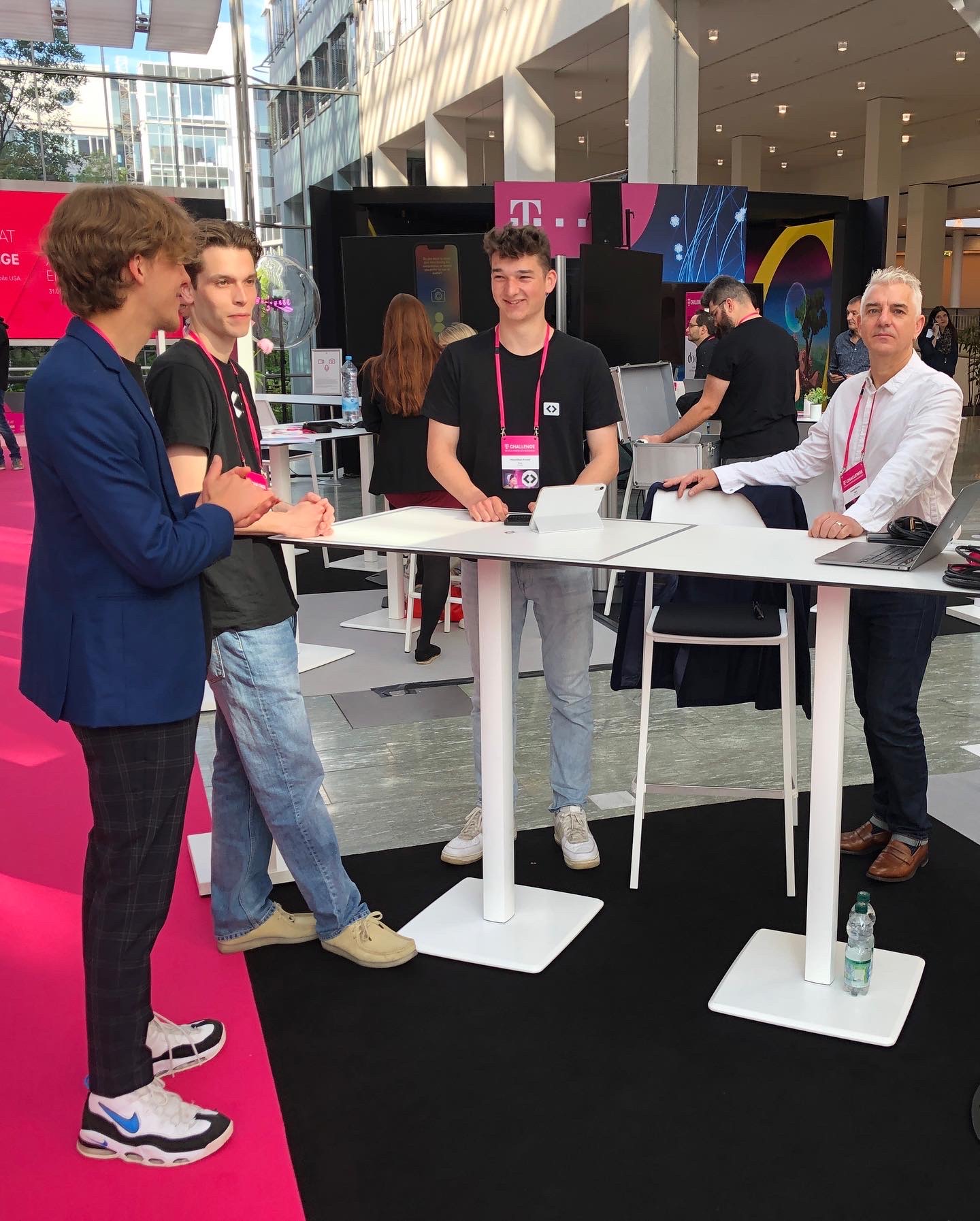
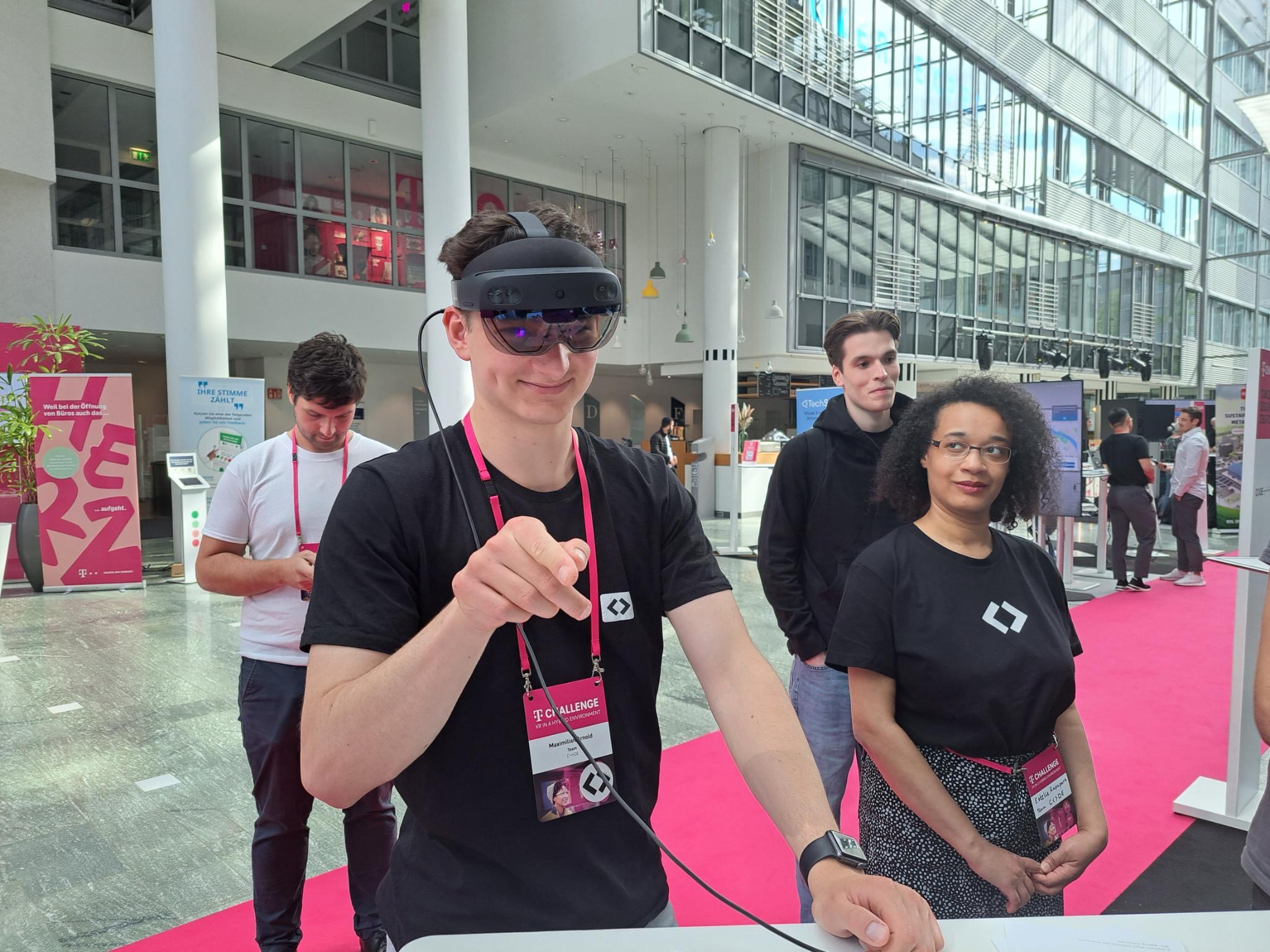
We ultimately secured second place in the Concept & Design track, standing out as one of the only fully student-led projects to win an award.
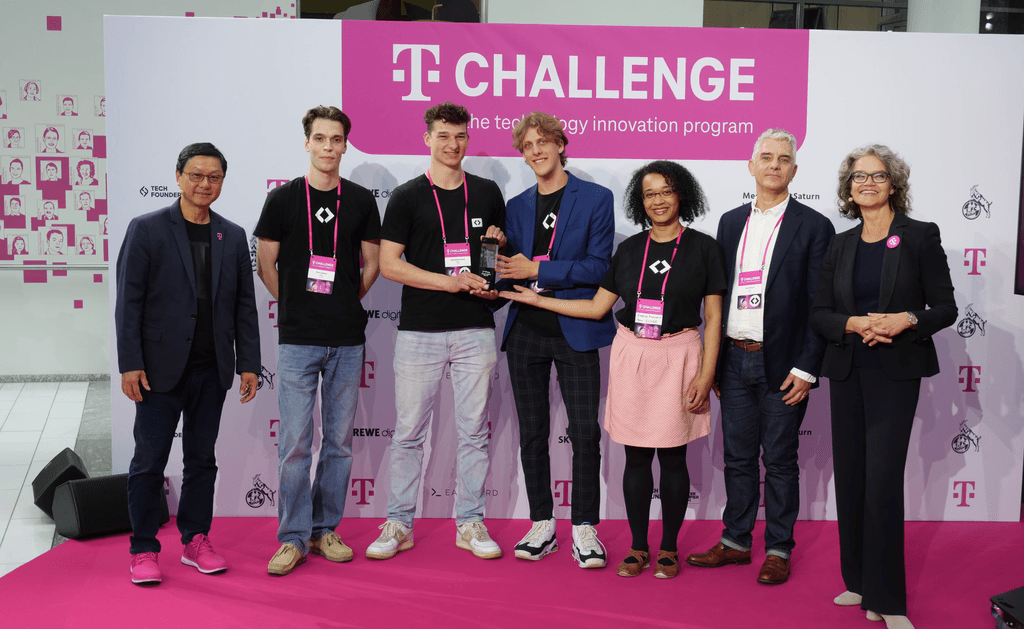
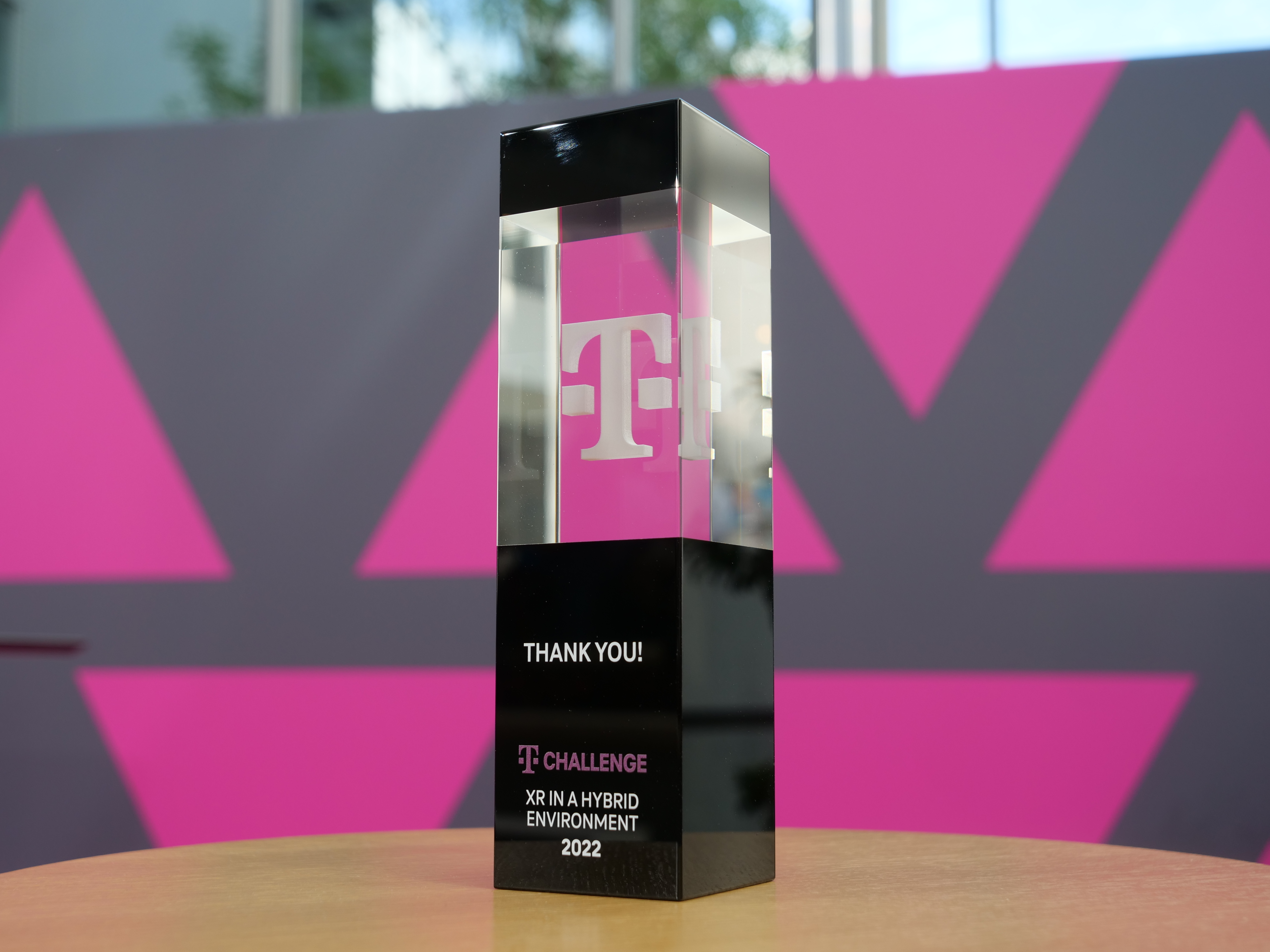
- Second place in the international XR Challenge out of 300+ corporate teams.
- €50,000 prize and presentation to the Deutsche Telekom executive board.
- Follow-up conversations around how to integrate XR workflows into existing collaboration stacks.
- Strong regonition by fellow students back at CODE University.
This project reinforced my interest in boundary areas between hardware, networks, and product experience.
Reflection
This project deepened my understanding of how XR can create brand magic when paired with real-world locations and meaningful interactions.
It also taught me how to:
- Prototype immersive experiences across multiple software ecosystems
- Translate abstract ideas into stakeholder-aligned design narratives
- Balance aesthetic vision with technical feasibility in a live spatial context
Perhaps most importantly, it showed me the power of XR as a bridge, not just between digital and physical, but between technology, art, and emotional connection.